Topic
Data Risk Management
Reference hub on measuring and reducing data exposure risk, including what DLP, DRM, and DSPM each enforce and where residual risk survives.
13 posts
Data risk management is the practice of identifying where sensitive data is exposed, measuring the consequence of that exposure, and reducing it with controls that hold under real conditions. It spans regulatory risk, third-party risk, insider misuse, and the residual risk left after a control succeeds only partially. The output is a decision about which exposures to accept and which to engineer away.
Registers and heat maps measure process maturity, not enforcement. A control marked effective because it is configured correctly still fails the moment the protected object moves past the system enforcing it: data loss prevention stops at the download, and vendor questionnaires document promises rather than mechanisms.
Posts under this hub compare what DLP, DRM, DSPM, and data-centric zero trust each enforce, examine cryptographic enforcement at decrypt time, treat data residency as a control rather than a location, and translate the result into terms a board and an audit committee act on.
Frequently asked questions
What happens to DLP controls after a file is downloaded?
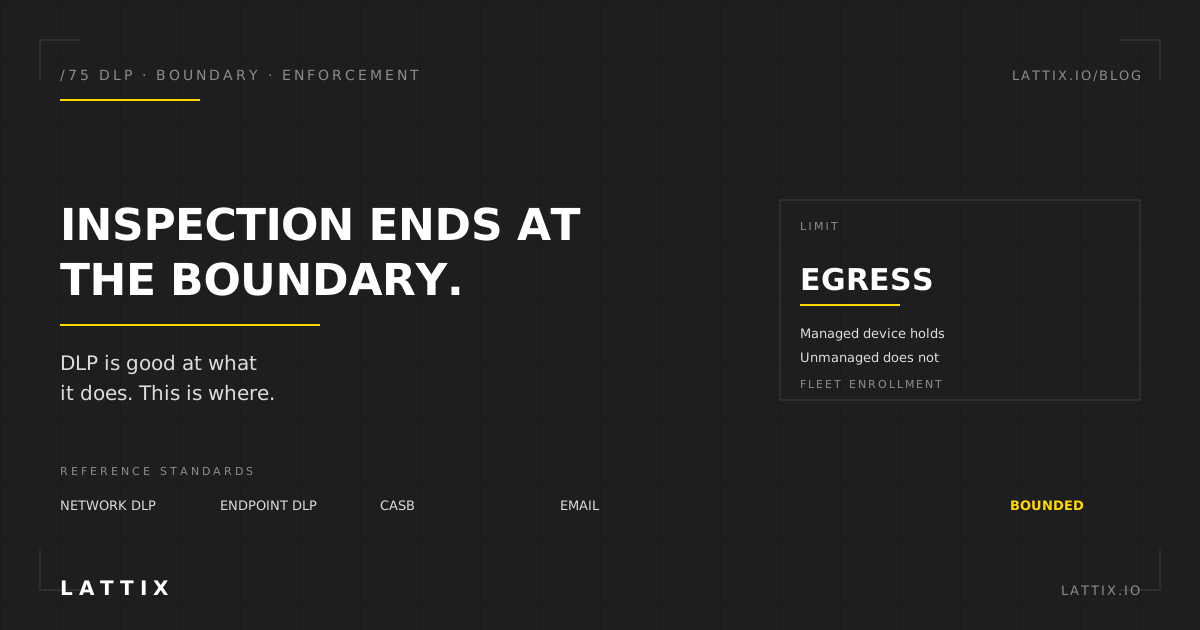
They stop. Data loss prevention inspects traffic and blocks transfers at monitored egress points, so its authority ends when a permitted copy lands on a device. The file then carries no policy, no expiry, and no revocation path. Controls that survive the download bind policy to the object and force a decision at every open.
What is the difference between DSPM and data-centric security?
Data security posture management discovers where sensitive data sits, classifies it, and reports misconfiguration and excess access. It observes and reports. Data-centric zero trust changes the outcome of a request: policy travels with the object, and a policy enforcement point (PEP) grants or denies each access. Posture states that the risk exists; enforcement removes it.
What does fail-closed mean in access control?
Fail-closed means the system denies access whenever it cannot reach a confident authorization decision. If the policy decision point is unreachable, an attribute is stale, or a signature does not verify, the request is refused rather than passed through. Fail-open systems do the opposite, which turns every outage into a silent window of unrestricted access.
How do you present data security risk to a board?
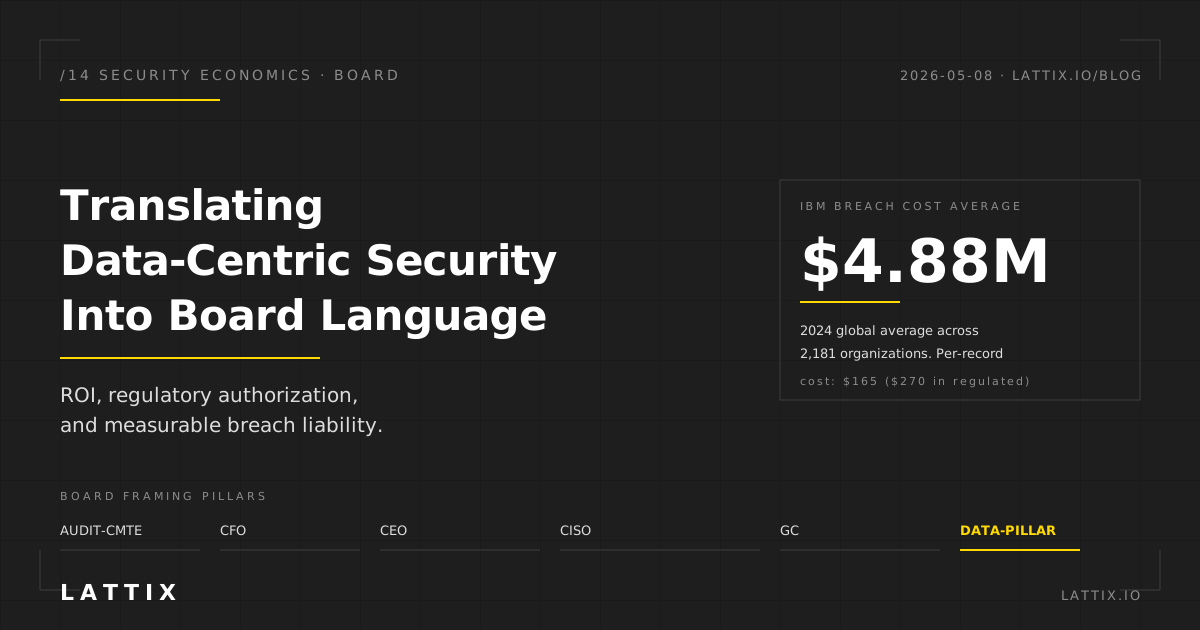
Convert control state into exposure and consequence. Boards act on statements such as how many sensitive objects are reachable without an enforced policy decision, how long revoking access to already distributed data takes, and what evidence exists within a disclosure deadline. Maturity scores and control counts answer none of those questions, so translate them first.