Topic

AI Security

How to protect training data, inference context, model weights, and agent credentials when guardrails alone do not make authorization decisions.

18 posts

AI security is the practice of protecting the data, models, and autonomous agents in a machine learning system from unauthorized access, manipulation, and disclosure. It covers training corpora, inference-time context, model weights, and the credentials an agent uses to reach other systems. The unit of protection is the data object, not the application wrapped around it.

Most programs stop at model-layer guardrails. Guardrails filter text; they do not make an authorization decision, so an agent holding a broad token still reaches everything that token opens. The OWASP Top 10 for LLM Applications 2025 names the pattern in LLM01 Prompt Injection, LLM02 Sensitive Information Disclosure, and LLM06 Excessive Agency, and each resolves at the data layer rather than in the prompt.

Posts under this hub cover agent credential delegation, retrieval-augmented generation context crossing trust boundaries, federated learning, and training-data protection. Others read the governing documents: the NIST AI Risk Management Framework, NIST AI 600-1, the EU AI Act timeline, and CISA's Secure by Design AI pledge. Incident writeups trace how orchestrator and platform compromises expose model data.

Frequently asked questions

How do you secure the data used to train an AI model?

Encrypt training records at the object level and bind an attribute-based access control (ABAC) policy to each one, so the policy travels into the pipeline. Keep a policy decision point (PDP) outside the training environment and log every retrieval against Merkle-tree lineage. Federated learning goes further by training on data that never leaves its owner's control.

What is the difference between AI guardrails and authorization?

Guardrails inspect prompts and outputs, then block patterns they recognize. Authorization evaluates who is asking, for which object, under which conditions, and returns an allow or deny before the data moves. Guardrails degrade open under novel phrasing; a decision at a policy enforcement point (PEP) is fail-closed. Production agent systems need both, with authorization as the control of record.

How do you stop prompt injection from leaking sensitive data?

Treat the model as untrusted and enforce outside it. Injected instructions cause damage only when the agent holds standing access to data it can exfiltrate, so scope every retrieval to a per-request authorization decision and encrypt results so unauthorized recipients cannot read them. OWASP lists this as LLM01 Prompt Injection, with LLM02 Sensitive Information Disclosure as the usual outcome.

What does the NIST AI Risk Management Framework require?

The NIST AI Risk Management Framework organizes AI risk work into four functions: Govern, Map, Measure, and Manage. It is voluntary and outcome-based rather than prescriptive, so organizations select controls that evidence each outcome. NIST AI 600-1, the Generative AI Profile, extends it with risks specific to generative systems, including data leakage, provenance failures, and confabulation.
Reading on ai security

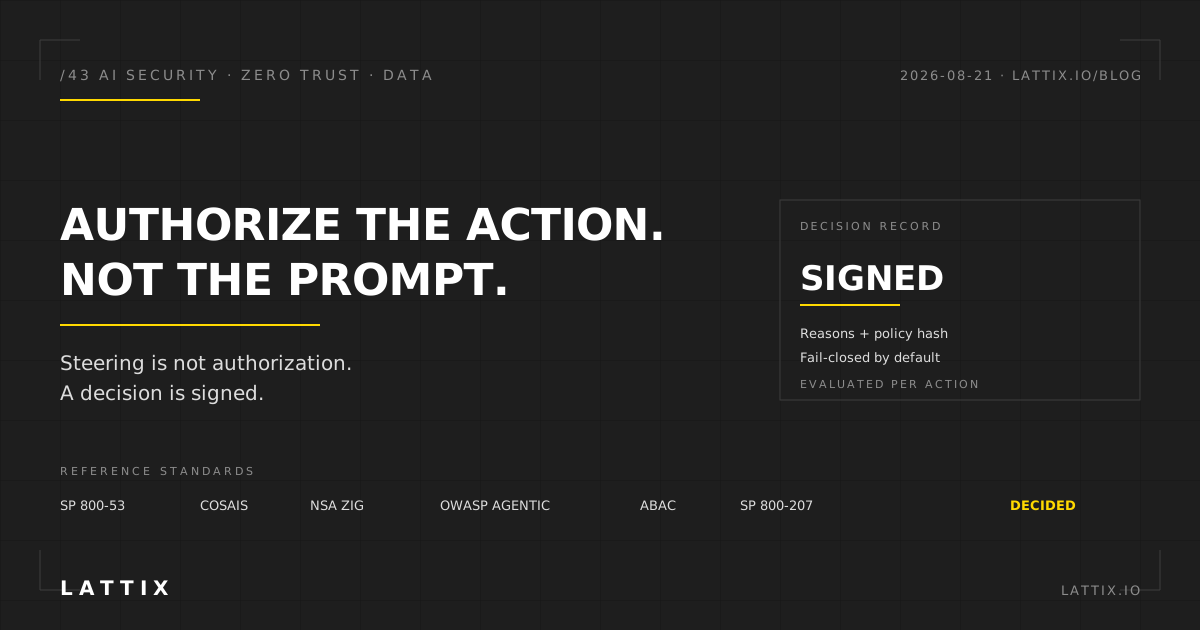
Lattix branded cover for AI Agents Need Authorization Decisions, Not Guardrails. /43 section number, dark grid background with surgical yellow accent rules, IBM Plex Mono typography, a reference box contrasting probabilistic steering against an evaluated signed decision, and an attribute strip naming subject, device, environment, purpose, network, risk and object.

AI Agents Need Authorization Decisions, Not Guardrails

August 21, 2026

Prompt filters and output classifiers steer a model. They do not authorize anything. An AI action request is an access request, and it belongs at a policy decision point that returns a signed allow or deny with the reasons attached.

Read More →
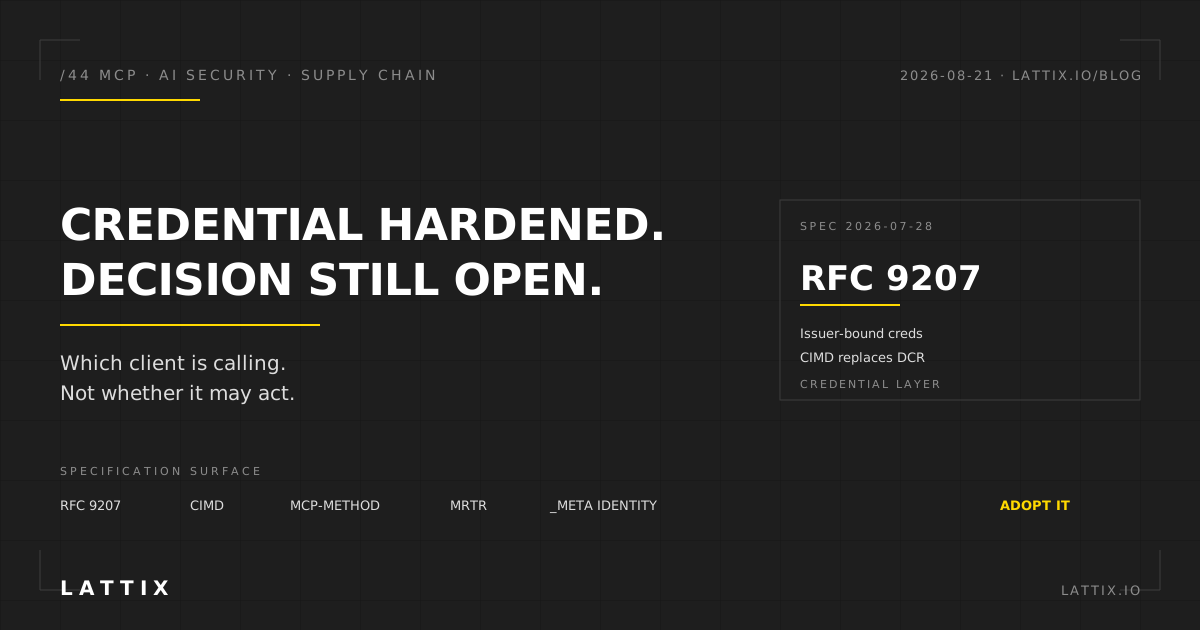
Lattix branded cover for the Model Context Protocol 2026-07-28 specification analysis. /44 section number, dark grid background with surgical yellow accent rules, IBM Plex Mono typography, a reference box listing the credential-layer changes the specification lands, and a request-path strip where the object policy enforcement point is highlighted as the decision the specification leaves to the deployer.

The MCP 2026-07-28 Spec Hardens the Token. The Action Still Needs a Decision.

August 21, 2026

The 2026-07-28 Model Context Protocol specification closes real credential-layer gaps with RFC 9207 issuer validation and issuer-bound client credentials. It answers which client is calling. It does not answer whether this action on this object is permitted.

Read More →
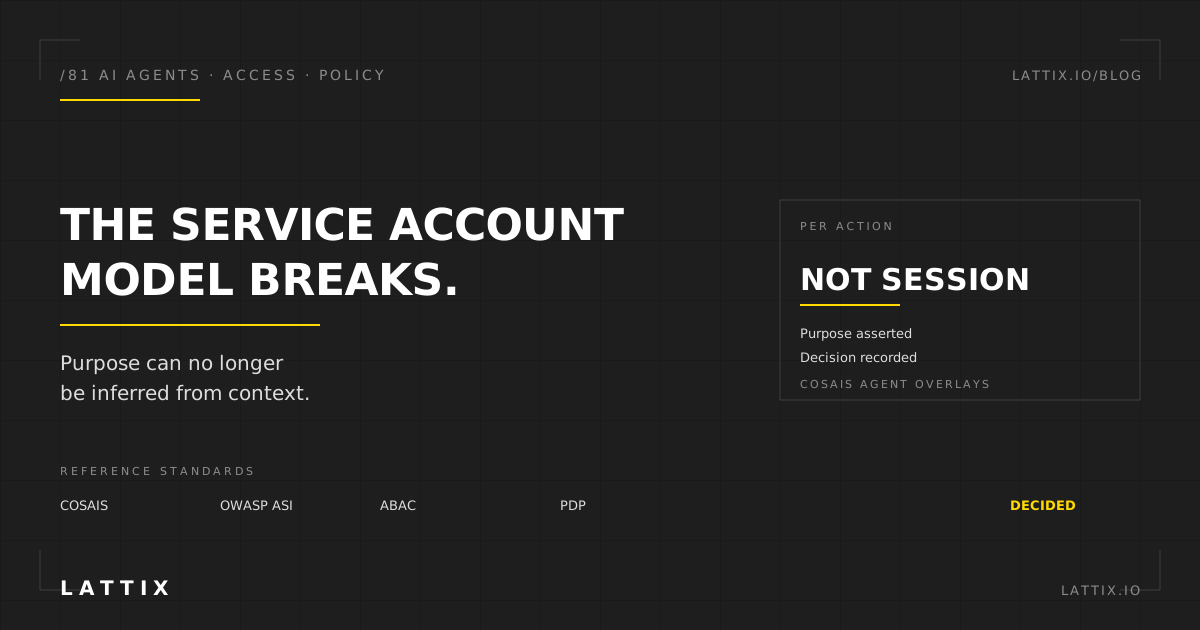
Lattix branded cover for How to Give an AI Agent Access to Sensitive Data Safely. Dark grid background, surgical yellow accent, IBM Plex Mono typography, with a reference box showing an agent issuing repeated tool calls, each one hitting a separate authorization decision before any object opens.

How to Give an AI Agent Access to Sensitive Data Safely

August 14, 2026

Give an AI agent a distinct identity, authorize each action rather than each session, require purpose as an asserted attribute, and enforce at the data object so derived artifacts stay governed.

Read More →
Lattix branded cover for Protecting RAG Context and Agent Tool Outputs Across Trust Boundaries. Section number, data-flow trust boundary map, IBM Plex Mono on dark grid background, surgical yellow accent on policy enforcement points.

Protecting RAG Context and Agent Tool Outputs Across Trust Boundaries

August 14, 2026

Modern AI systems copy, cache, retrieve, and forward data across multiple trust boundaries. Session-level authorization does not persist once data leaves its origin. A data-centric security model with persistent policy, contextual authorization, and cross-boundary evidence closes the gap.

Read More →
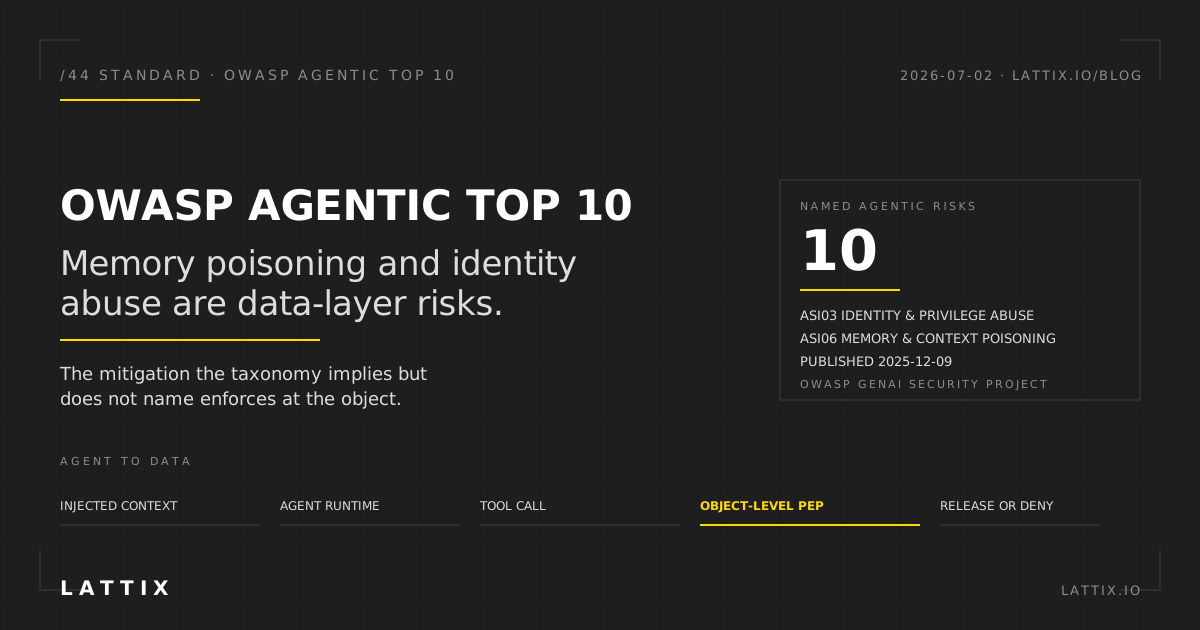
Lattix branded cover for the OWASP Top 10 for Agentic Applications 2026. /44 section number, IBM Plex Mono typography on a dark grid background, surgical yellow accent on the object-level policy enforcement point, ASI03 identity abuse and ASI06 memory poisoning callouts, LATTIX wordmark and lattix.io footer.

OWASP Agentic Top 10: Memory Poisoning and Identity Abuse Are Data-Layer Risks

July 2, 2026

OWASP's Top 10 for Agentic Applications 2026 names memory poisoning, identity abuse, and tool misuse among the top agentic risks. Several entries reduce to ungoverned data access, and object-level cryptographic enforcement is the control the taxonomy implies but does not name.

Read More →
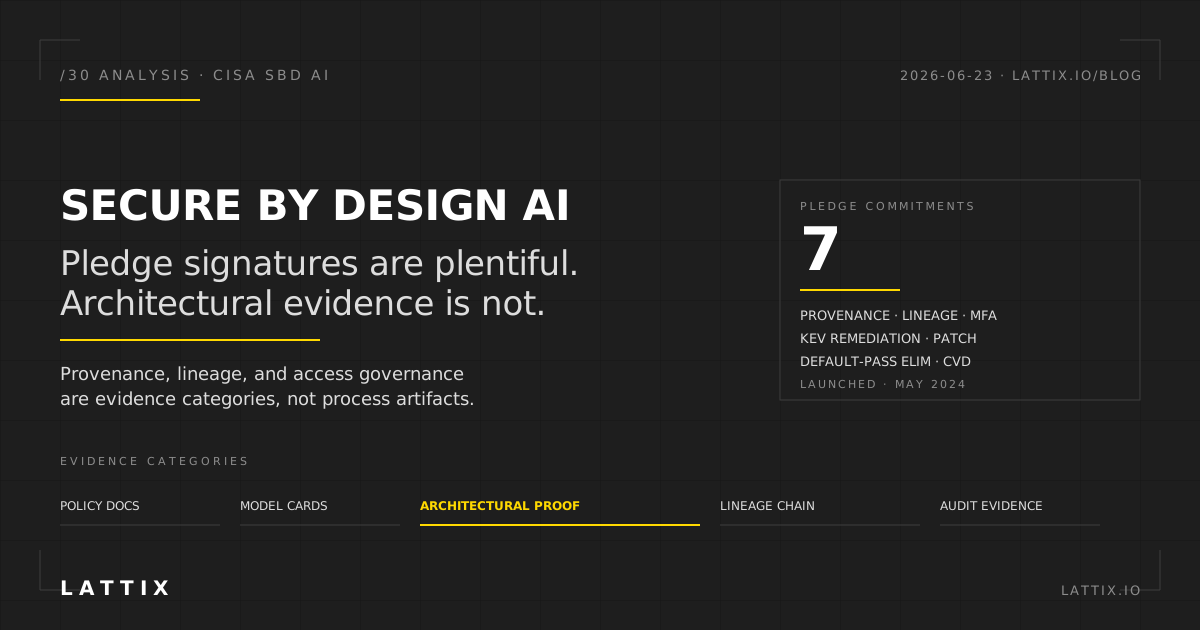
Lattix branded cover for CISA Secure by Design AI Pledge One Year In. /30 section number, 2024 pledge launch date, signatory commitment categories statistic, IBM Plex Mono on dark grid background, surgical yellow accent on the evidence pillar in a pledge commitment strip.

CISA Secure by Design AI Pledge: A Year In, Evidence Is What Is Missing

June 23, 2026

The CISA Secure by Design AI pledge launched in 2024 with broad industry signatories. A year later, evidence supporting the pledge commitments remains uneven. Data provenance, training-set lineage, and access governance over model outputs are the evidence categories vendors cannot produce.

Read More →
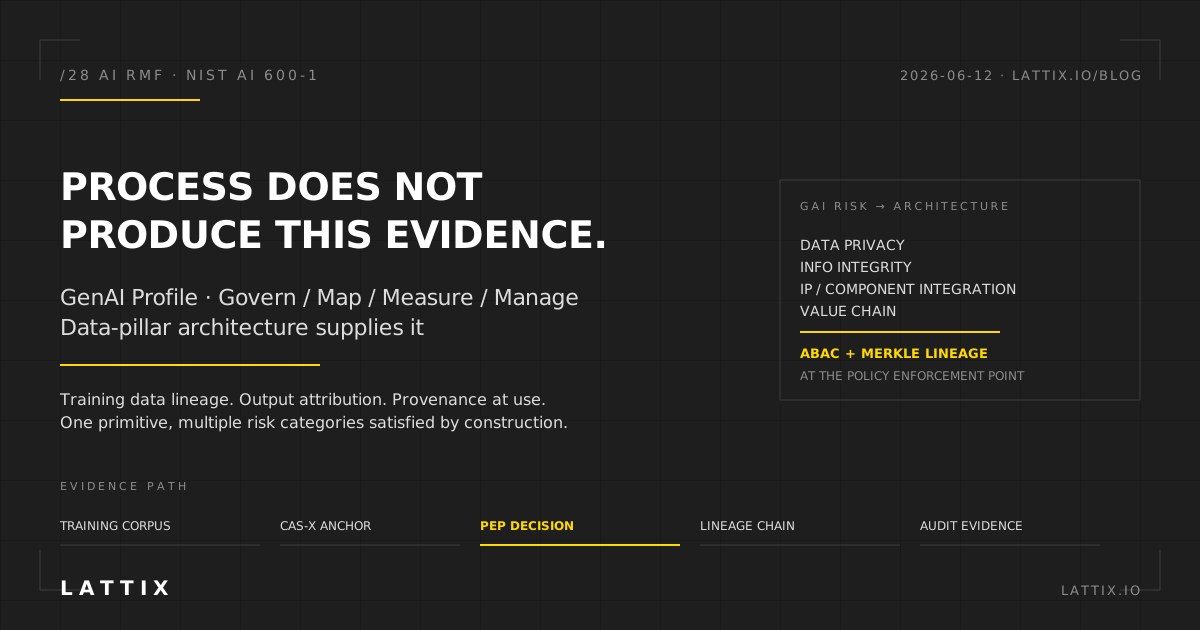
Lattix branded cover for NIST AI 600-1 GenAI Profile Maps Cleanly to Data-Centric Controls. /28 section number, GAI risk-to-control mapping table, IBM Plex Mono on dark grid background, yellow accent on the data-pillar controls that satisfy multiple GAI risk categories from one primitive.

NIST AI 600-1 GenAI Profile Maps Cleanly to Data-Centric Controls

June 12, 2026

NIST AI 600-1 names the unique risks of foundation models. The mitigations the profile recommends, training data provenance, output attribution, access governance over model artifacts, are evidence categories that process attestation cannot supply. Data-centric architecture supplies them by construction.

Read More →
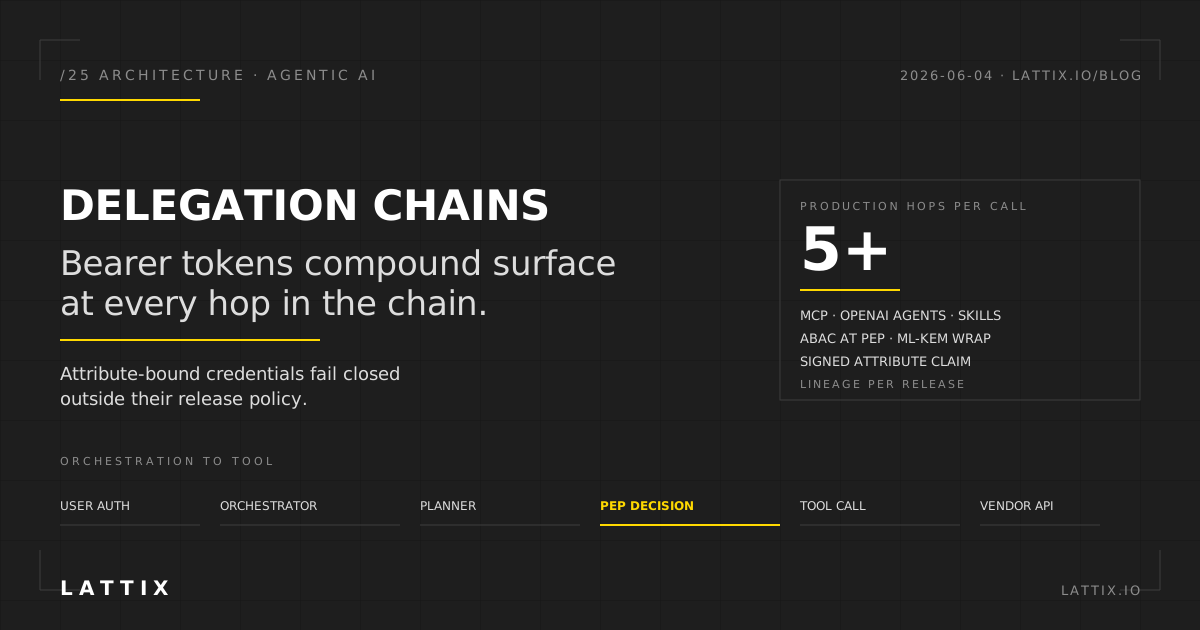
Lattix branded cover for AI Agents Form Credential Delegation Chains. /25 section number, agent-to-agent delegation hops metric, IBM Plex Mono on dark grid background, surgical yellow accent on the policy enforcement point in a multi-hop chain strip.

AI Agents Form Credential Delegation Chains. Static Tokens Cannot Hold.

June 4, 2026

Autonomous agent workflows now span multiple hops, multiple vendors, and multiple identity domains. A bearer token at any hop is the failure point. Treating each delegated credential as a policy-bound data object closes the chain. The architecture is procurable today.

Read More →
Lattix

Anthropic's Zero Trust for AI Agents Framework Reaches the Data Layer at the Optimized Tier

June 2, 2026

Anthropic published a Zero Trust framework for autonomous AI agents on May 27, 2026. The framework names the right architecture for the agent threat model. The Optimized tier reaches the data layer. Data-centric enforcement is how organizations get there.

Read More →
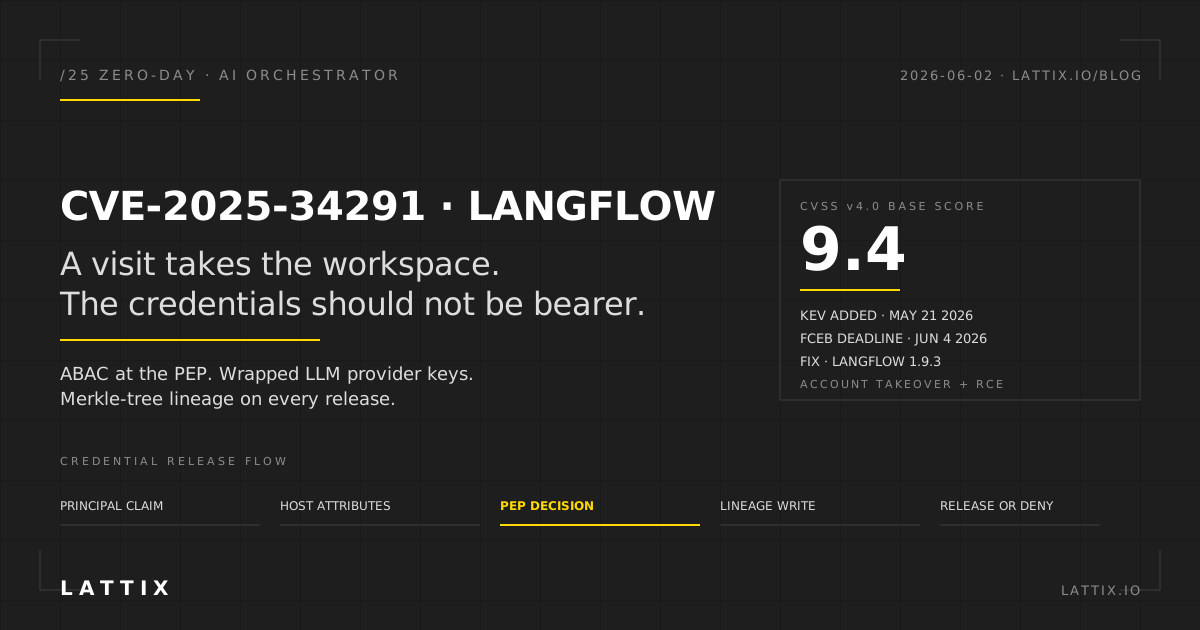
Lattix branded cover for Langflow CVE-2025-34291 Hands Over the AI Orchestrator's Credential Stash. /25 section number, May 21 2026 KEV addition and June 4 2026 FCEB deadline, CVSS 9.4 statistic, IBM Plex Mono on dark grid background, surgical yellow accent on the policy enforcement point in an LLM provider credential release flow strip.

Langflow CVE-2025-34291 Hands Over the AI Orchestrator's Credential Stash

June 2, 2026

CISA added Langflow CVE-2025-34291 to KEV on May 21, 2026 with a June 4 FCEB deadline. The CVSS 9.4 flaw turns a visit to a malicious page into account takeover plus RCE on a Langflow workspace. The harvested material is the operator's full AI credential stash.

Read More →
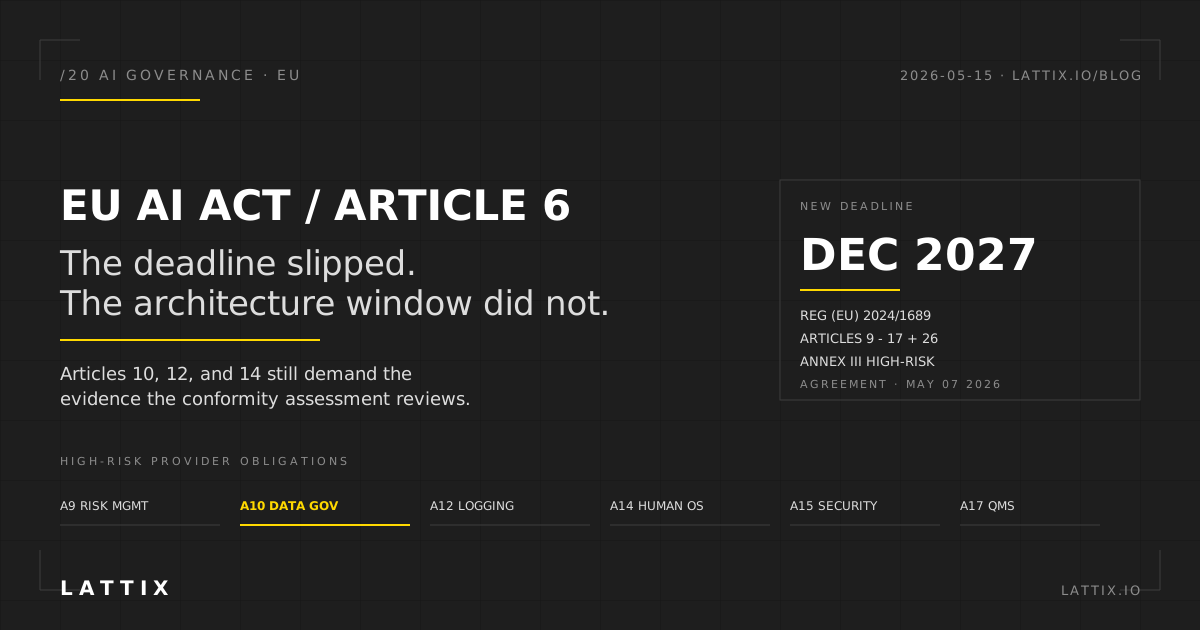
Lattix branded cover for The EU AI Act High-Risk Deadline Slipped to December 2027. /20 section number, December 2027 deadline metadata, Articles 9 through 17 plus 26 statistic, IBM Plex Mono on dark grid background, surgical yellow accent on the data governance node in an Articles map strip.

The EU AI Act High-Risk Deadline Slipped to December 2027. The Architecture Window Did Not.

May 15, 2026

The May 7, 2026 political agreement pushed the EU AI Act Article 6 deadline from August 2026 to December 2027. The substantive obligations under Articles 10, 12, and 14 did not change. The architecture that produces conformity evidence takes twelve to eighteen months to build.

Read More →
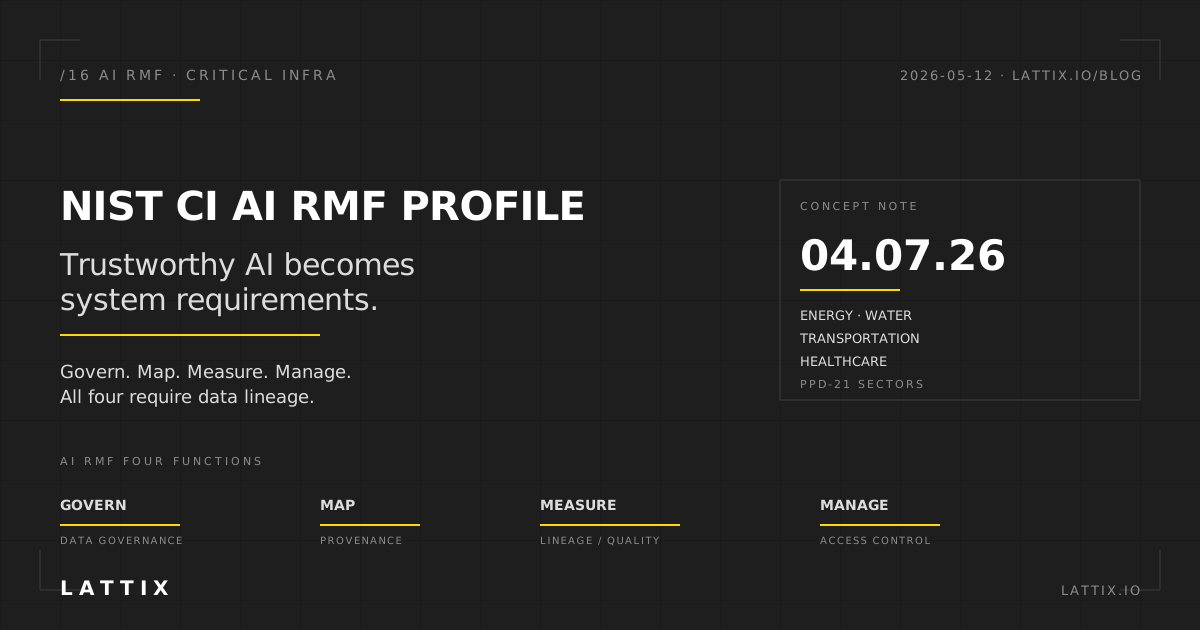
Lattix branded cover for NIST's Critical Infrastructure AI RMF Profile Turns Trustworthy AI Into System Requirements. /16 section number, AI RMF four function diagram, IBM Plex Mono on dark grid background, surgical yellow accent.

NIST's Critical Infrastructure AI RMF Profile Turns Trustworthy AI Into System Requirements

May 12, 2026

NIST published the concept note for a Trustworthy AI in Critical Infrastructure Profile on April 7, 2026. The profile turns the AI RMF Govern, Map, Measure, Manage functions into system requirements for energy, water, and transportation operators. Data provenance and lineage map directly to the profile controls.

Read More →
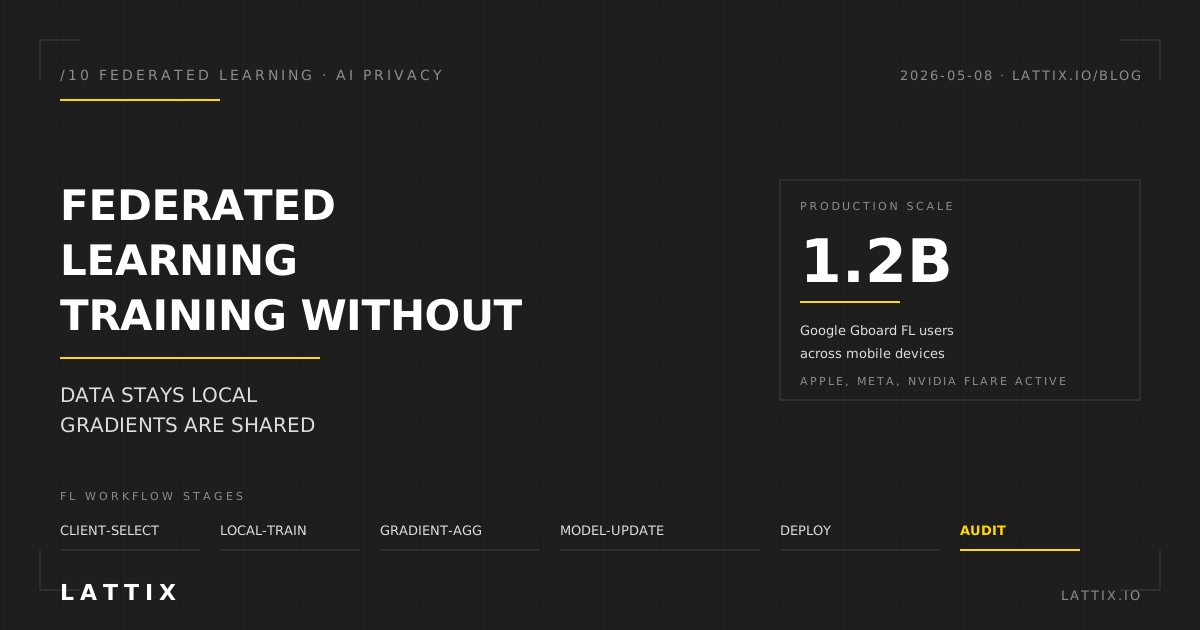
Lattix branded cover for federated learning. /10 section number, IBM Plex Mono on dark grid background, surgical yellow accent.

Federated Learning: Training AI Without Surrendering Data

May 8, 2026

Federated learning trains models by sharing gradients, not data. Combined with data-centric zero trust, it makes privacy-preserving AI a realistic architectural choice, not an academic one.

Read More →
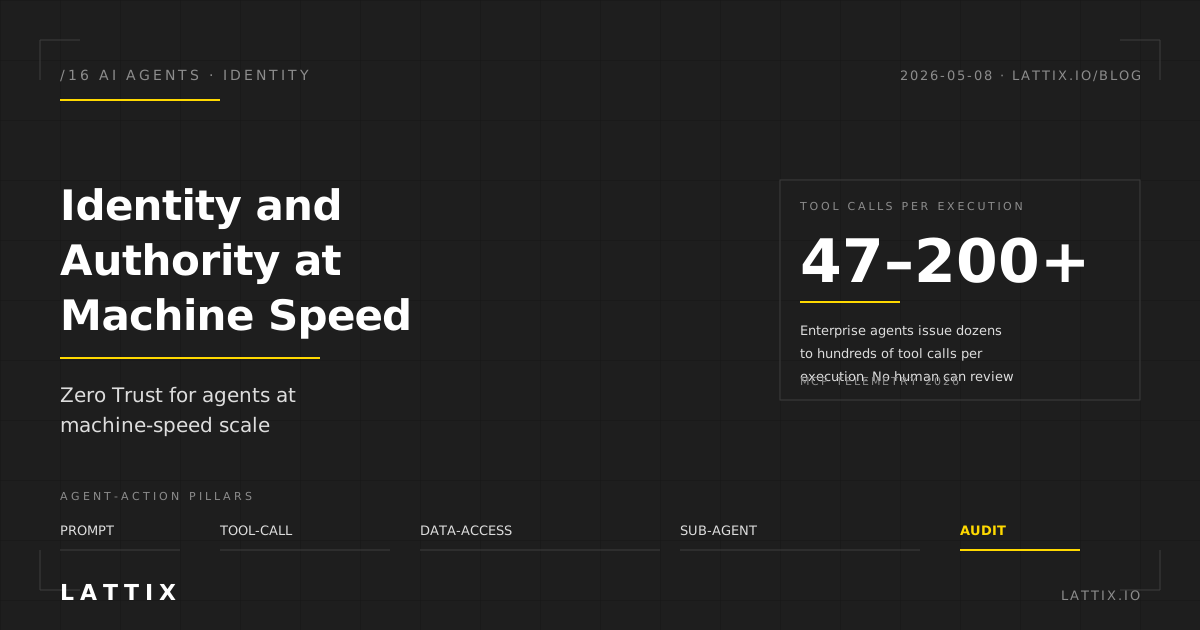
Lattix branded cover for autonomous AI agent identity and zero trust. /16 section number, IBM Plex Mono on dark grid background, surgical yellow accent. Agent-action pillars: PROMPT, TOOL-CALL, DATA-ACCESS, SUB-AGENT, and AUDIT with AUDIT highlighted.

Identity and Authority at Machine Speed

May 8, 2026

Autonomous agents make decisions and move data at machine speed. Zero Trust identity architecture must evolve to grant and audit authority at that pace.

Read More →
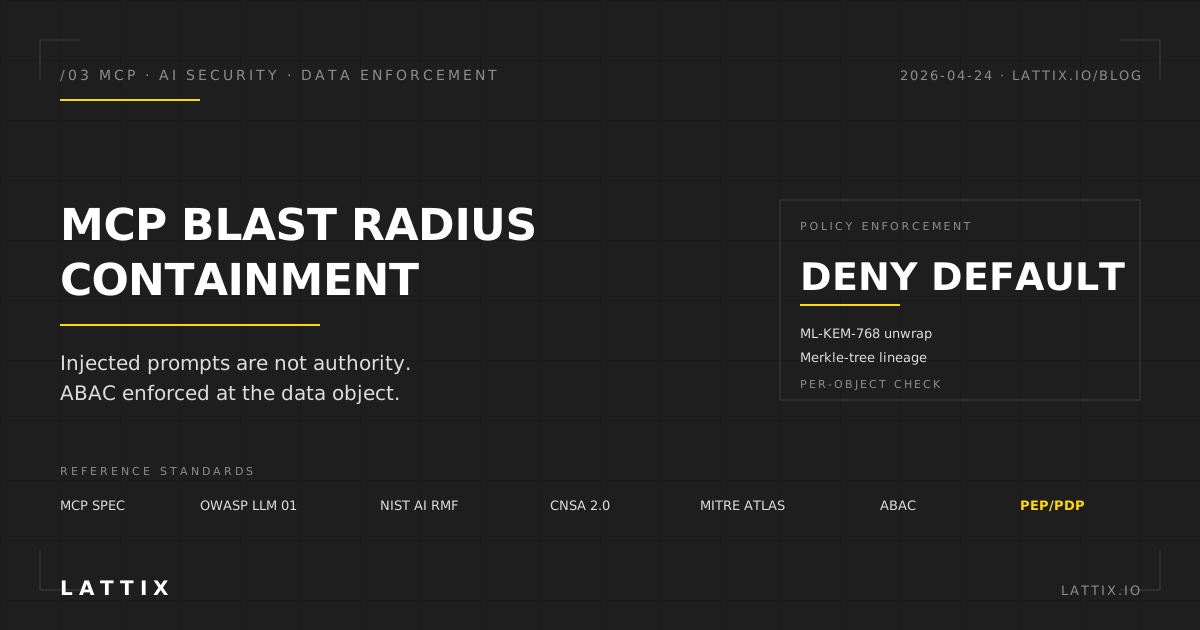
Lattix diagram showing an MCP-connected AI agent with injected prompts denied at policy enforcement points, ABAC-compliant accesses allowed with ML-KEM-768 unwrap, and every decision committed to a Merkle-tree lineage.

How Cryptographic Data Enforcement Contains the MCP Blast Radius

April 24, 2026

AI agents acting on injected instructions are now the dominant exfiltration vector. Two April 2026 incidents show why ABAC enforcement at the data object, not the network or the identity plane, is the control that actually contains MCP.

Read More →
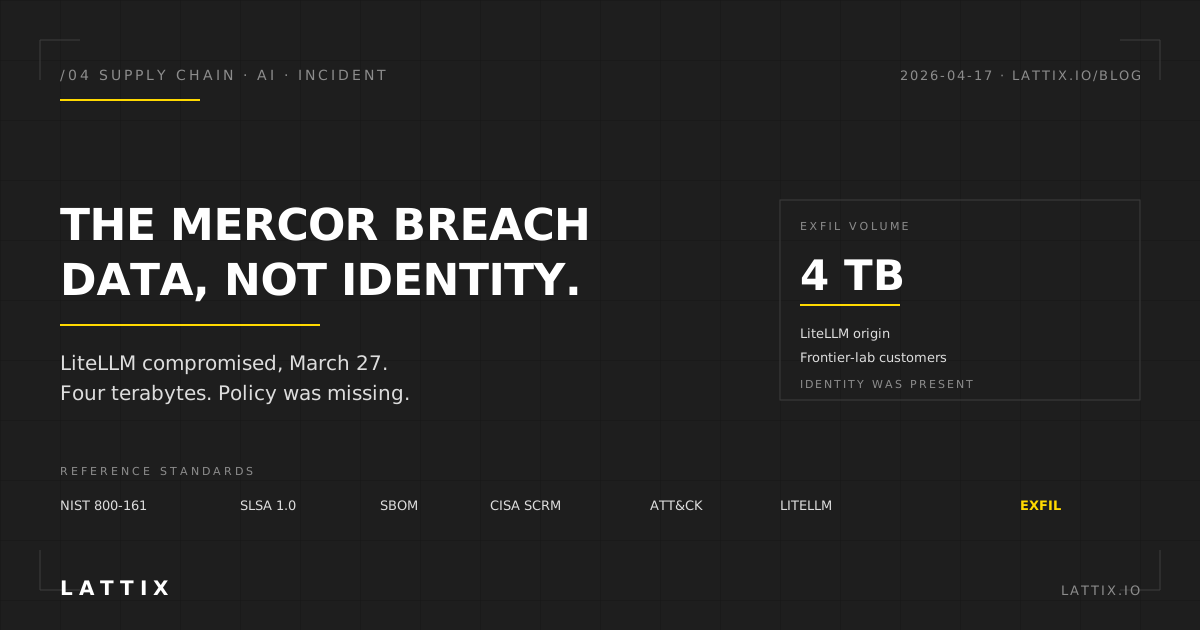
Abstract Lattix diagram of a compromised runtime pipeline feeding downstream data stores, with policy-bound data objects remaining sealed.

The Mercor Breach Is a Data-Centric Security Story. Not an Identity One.

April 17, 2026

A malicious LiteLLM package pushed March 27, 2026 cascaded into a four-terabyte exfiltration from an AI training-data vendor whose customer list reads like the frontier lab leaderboard. Identity controls were present. They were not the control that mattered.

Read More →
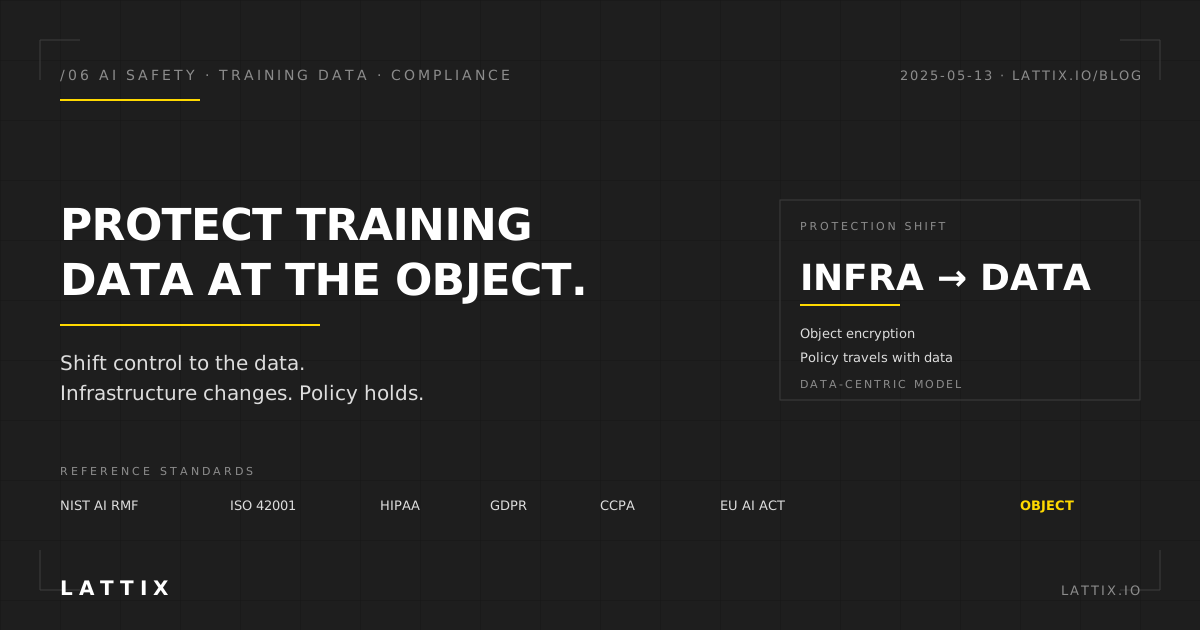
Lattix branded cover for Protecting Sensitive AI Training Data with Data-Centric Security. /06 section number, infrastructure-to-data protection shift metadata, IBM Plex Mono on dark grid background.

Protecting Sensitive AI Training Data with Data-Centric Security

May 13, 2025

AI systems are only as trustworthy as the data they train on. A data-centric security approach shifts protection from infrastructure to the data itself.

Read More →
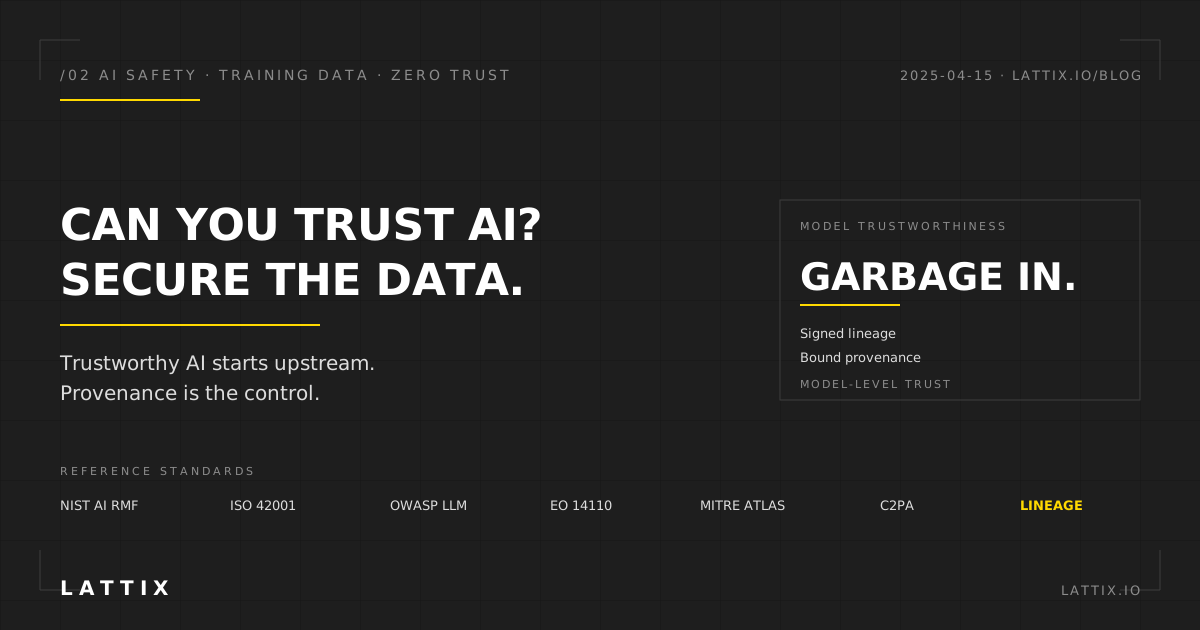
Lattix branded cover for Can You Trust AI? Not Without Securing the Data It Trains On. /02 section number, training-data integrity metadata, IBM Plex Mono on dark grid background.

Can You Trust AI? Not Without Securing the Data It Trains On

April 15, 2025

AI trustworthiness depends entirely on training data integrity. Without securing the data pipeline, AI outputs cannot be trusted.

Read More →