Topic
Data Sovereignty
Why residency and sovereignty are different requirements, and how policy-bound access makes a sovereignty claim enforceable.
6 posts
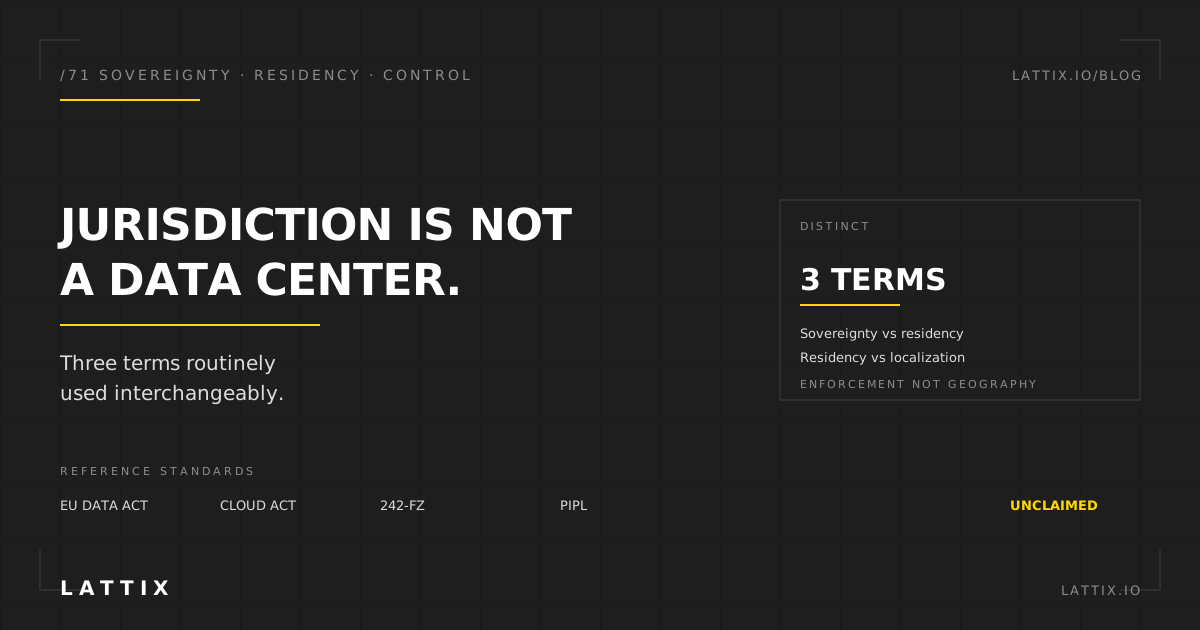
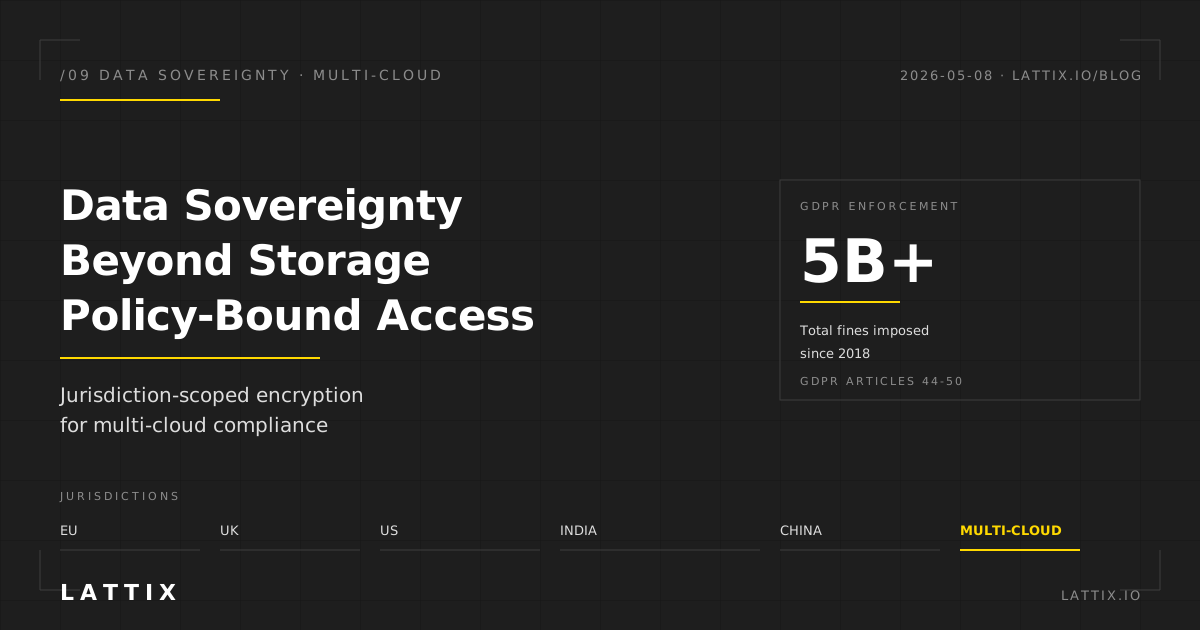
Data sovereignty is the requirement that data stay subject to the law and control of a specific jurisdiction, including who may access it and under what legal authority. Storage location is the visible part of the requirement, but the binding question is whether an access decision can be enforced when the requester sits outside that jurisdiction. Residency answers where bytes rest; sovereignty answers who can open them.
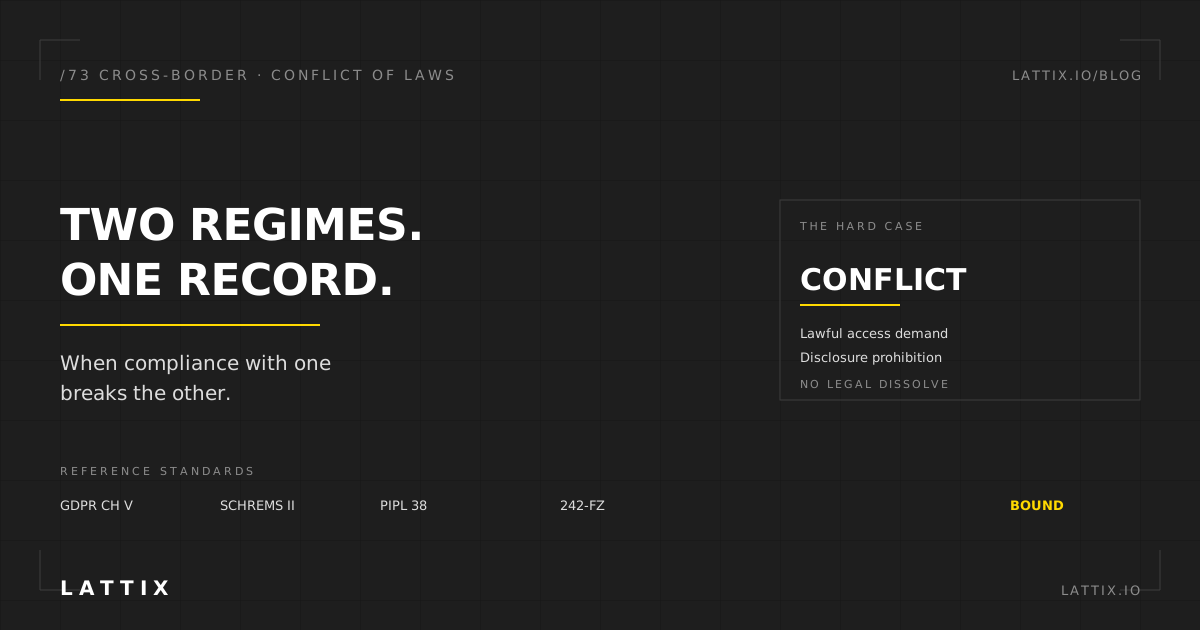
Region-locked storage is the common shortcut and the common failure. A cloud region satisfies a residency clause while administrative accounts, support tooling, and legal process still reach the plaintext from elsewhere. Conflicting regimes sharpen the problem: one government compels disclosure while another prohibits it, and infrastructure controls cannot resolve that conflict for an individual record.
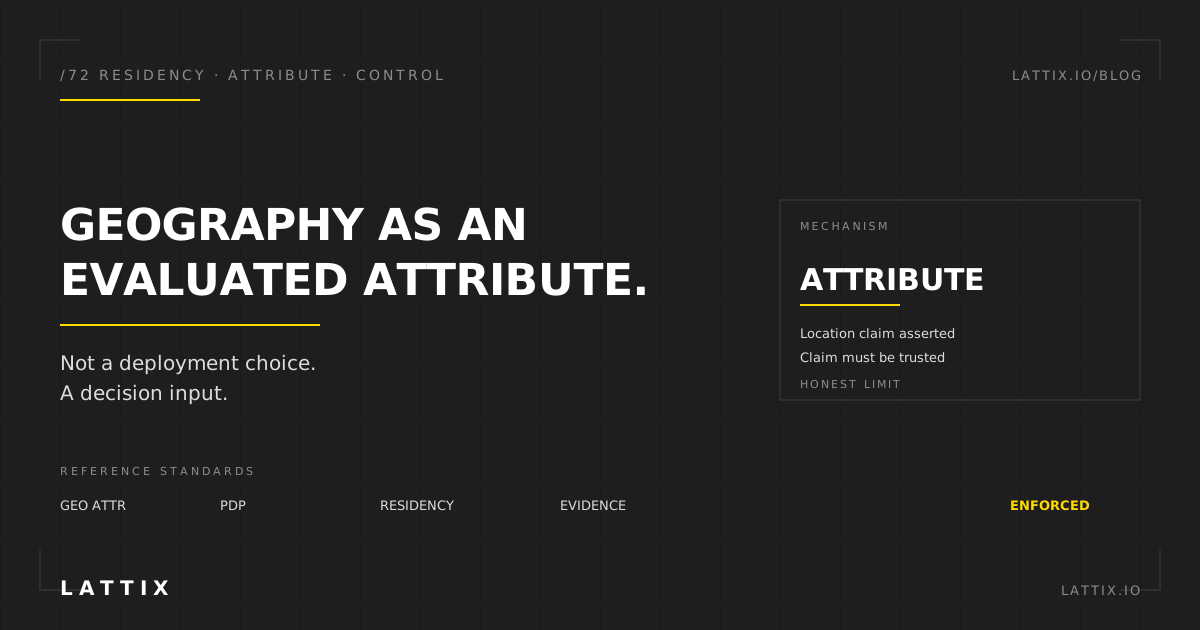
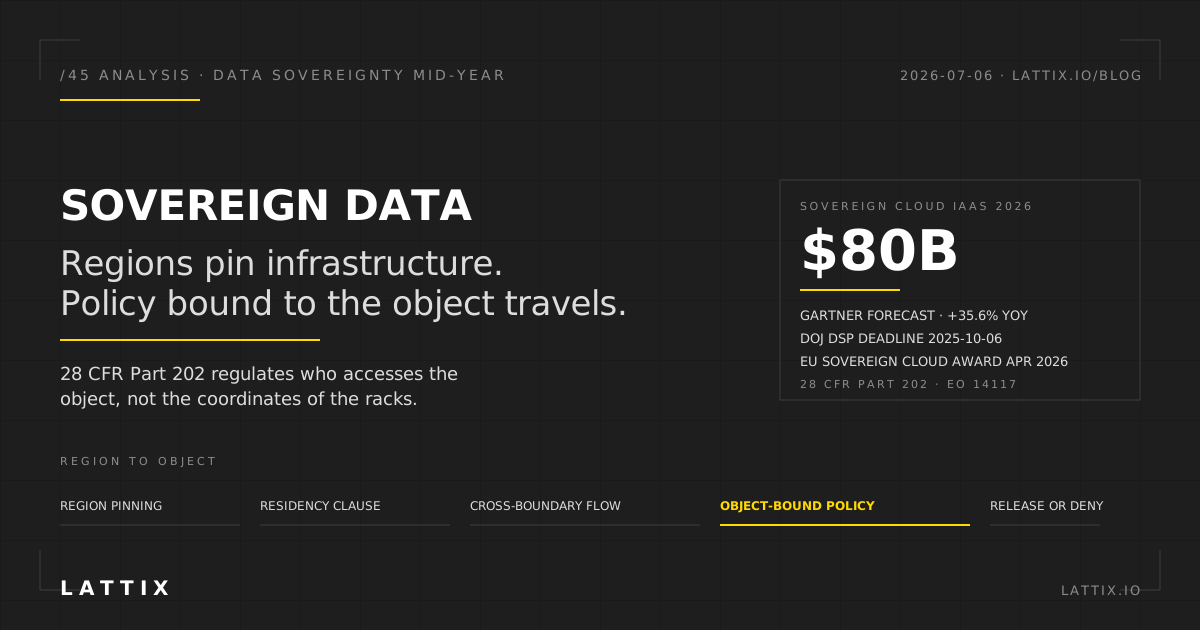
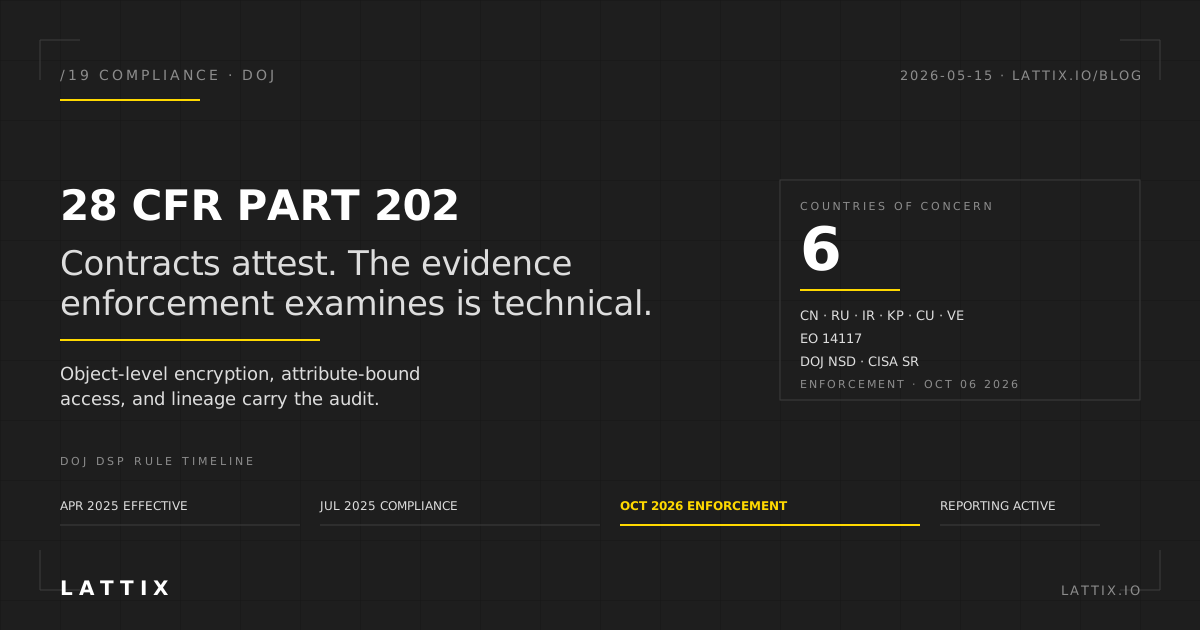
Posts under this hub turn residency into an enforceable control, examine multi-cloud architectures where the policy decision point (PDP) stays under national control, work through cross-border sharing under conflicting legal regimes, and cover DOJ 28 CFR Part 202 restrictions on bulk sensitive data transfers.
Frequently asked questions
What is data sovereignty?
Data sovereignty is the principle that data falls under the laws of the jurisdiction that governs it, which determines who may access it and through what legal process. Meeting the requirement involves controlling access decisions, not only choosing a storage location. A sovereignty claim holds when the organization can demonstrate that no party outside the jurisdiction can obtain readable data.
Is data residency the same as data sovereignty?
No. Residency is a location requirement stating that data must be stored or processed within defined borders. Sovereignty is a control requirement stating that the data remains governed by that jurisdiction's law and authority. Data can sit inside the correct region while foreign administrators, support staff, or legal orders still reach it, satisfying residency and failing sovereignty.
How do you handle conflicting cross-border data laws?
Resolve the conflict per object rather than per system. Attach the applicable jurisdiction, classification, and handling rules to each record, then evaluate access requests against the requester's jurisdiction and authority at request time. That produces decisions that differ by record inside one repository, and it produces an evidence trail showing which rule governed each release.